


Share this post


Leadership in data resilience: How execs must earn long-term trust
Resilience has evolved from risk mitigation to a strategic advantage. CIOs and CISOs explain why continuity, not recovery, now defines business success in this HotTopics C-Suite Exchange.
For years, resilience sat comfortably in the risk column. It was something to manage, insure, or recover from. Within leadership resilience was a necessary cost. For years now, that framing no longer holds.
Across industries, resilience has shifted from a reactive safeguard to a defining and competitive capability. It now shapes how organisations grow, compete, and lead. The question is no longer “How do we recover?” but “Can we continue to operate, no matter what happens?” or “What elements or systems are we happy to temporarily lose as a minimum viable company posture?”
This is a fundamentally different business strategy and psychological profile for leaders to adopt with confidence.
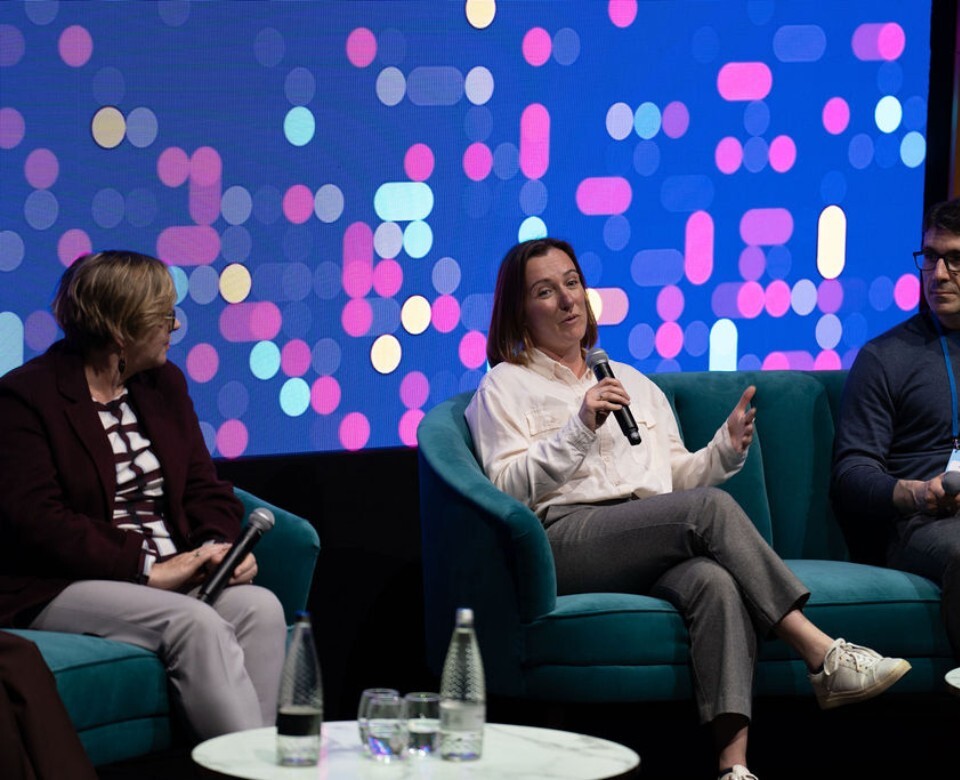
As a recent C-Suite Exchange in partnership with Veeam confirmed, resilience is not free. It requires visible, often uncomfortable decisions: introducing friction, redundancy, and tighter controls that may slow progress or increase cost in the short term, in order to protect trust, continuity, and long-term strategic durability. This article is a write-up of the discussions between CIOs and CISOs within that Exchange as they navigate compromises much of the industry is still reluctant to confront.
From protection to continuity
Traditional approaches to resilience focused heavily on prevention and backup: if something failed, systems could be restored, and if data was lost, it normally could be recovered. That model assumed disruption was occasional and contained.
Today, we heard, disruption is a constant. Cyber threats, supply chain dependencies, regulatory pressure, and the pace of technological change from AI all mean that failure is increasingly expected. This change in the temperament of risk has forced technology leaders to pragmatically mature their risk posture.
“Resilience is not about returning to normal. It is about maintaining continuity during disruption,” one leader quipped.
This distinction matters to customers, analysts, regulators, and the board alike. A business that can recover in 48 hours may still lose customers, revenue, and trust. A business that continues operating, even at reduced capacity, retains its position. Choosing what efforts should be protected at all costs and what can be “sacrificed” is the difficult, but necessary, conversation.
Continuity is where resilience becomes a competitive advantage.
The data maturity divide
One of the clearest insights from the virtual debate was that resilience means very different things depending on organisational maturity.
Less mature organisations—in their data and processes—tend to equate resilience with having a backup, but that assumption creates a false sense of security. Backup alone does not guarantee recovery, and it certainly does not guarantee continuity in a climate where the risk register flashes on a daily basis.
More mature organisations take a broader view. They understand that resilience spans people, process, and technology. They are investing in recovery planning, testing, and cross-functional alignment. They are also recognising that resilience is not a one-off project, but an ongoing capability.
The difference shows up in outcomes: mature organisations spend less time firefighting and more time focusing on growth where they can; they have “evolved away from reactive cycles of addressing gaps as they appear” and into a cultural “posture where team members and departments understand what core parts of the business need to always work, and what their responsibilities are.”
This conversation then moved on to the concept of ‘good enough’.
It is a recurring challenge for the C-suite. From CFOs battling cost transparency to HR leaders sourcing the right talent at the right time, and most often in complex enterprises, there is the “illusion of adequacy”, as one attendee described it. It is relatively commonplace for things to look secure, whereas in reality controls are often fragmented, outdated, or misaligned with current risks.
Large organisations face a particular difficulty here. As systems evolve, controls are layered rather than redesigned so what was effective six months ago may no longer be relevant. Over time, this creates a patchwork of protections that are individually sound but collectively inconsistent and no one person or team has the broader view of how it works altogether.
The result is a form of operational drift, according to Harvard Business Review. One of the take-home messages from the discussion was to acknowledge this drift as a matter or urgency.
Trade-offs are unavoidable
One of the most important shifts in thinking is the acceptance that resilience is not free.
Every decision involves trade-offs; listing these, attendees shared: speed versus control, or cost versus coverage, or innovation versus stability. Should leaders expend energy eliminating these? Perhaps surprisingly to those outside the C-suite, the answer was—and is—“no”. Leaders need to make them explicit.
Nearly every business now operates in a fast-moving environment and so there is often pressure to prioritise delivery. Conversely, over-engineering resilience can slow the organisation down and divert resources from growth initiatives.
The balance lies in understanding what truly matters—in the explicit nature of understanding trade-offs.
“Not all systems require the same level of protection and not all data carries the same value,” one leader wrote as a follow-up point to the discussion.
This tells us that more and more organisations are becoming more deliberate in how they prioritise—and more pragmatic in their holistic approach to resilience. They identify critical assets, align protection accordingly, and, crucially, accept that not everything can or should be treated equally.
Artificial intelligence is beginning to reshape how resilience is approached.
A new question for leaders
The most important takeaway for senior leaders is this: where resilience was one once about avoiding disruption, it is now about operating through it.
Leaders should add the following critical questions to their lexicon:
“Can we continue?”, “Can the business function if systems are compromised?”, “Can customers still be served?”, and “Can decisions still be made with confidence?”
There are likely more, but organisations that can answer yes to those questions will outperform competitors who cannot. Resilience is no longer risk mitigation but a key foundation for growth, trust, and adaptability.
In partnership with



Join the community
To join the HotTopics Community and gain access to our exclusive content, events and networking opportunities simply fill in the form below.