


Share this post


More with less: The challenges and strategies of IT automation
AI may be reshaping enterprise priorities, but experts warn that disconnected systems and legacy processes remain the biggest barriers to growth. Discover why integrated IT automation is the foundation for successful AI adoption and long-term operational efficiency.
The period of huge digital transformation budgets, where organisations could easily fund sprawling DevOps transformations and broad modernisation overhauls, has drawn to a close. These days, under the weight of continued macroeconomic pressures and geopolitical instability, corporate boards and CEOs are demanding identical transformation outcomes, but with an asterisk:
If it can be done for less money, that would be ideal.
At the same time, capital is aggressively shifting, moving into AI innovation budgets and starving established IT operational programs in the process.
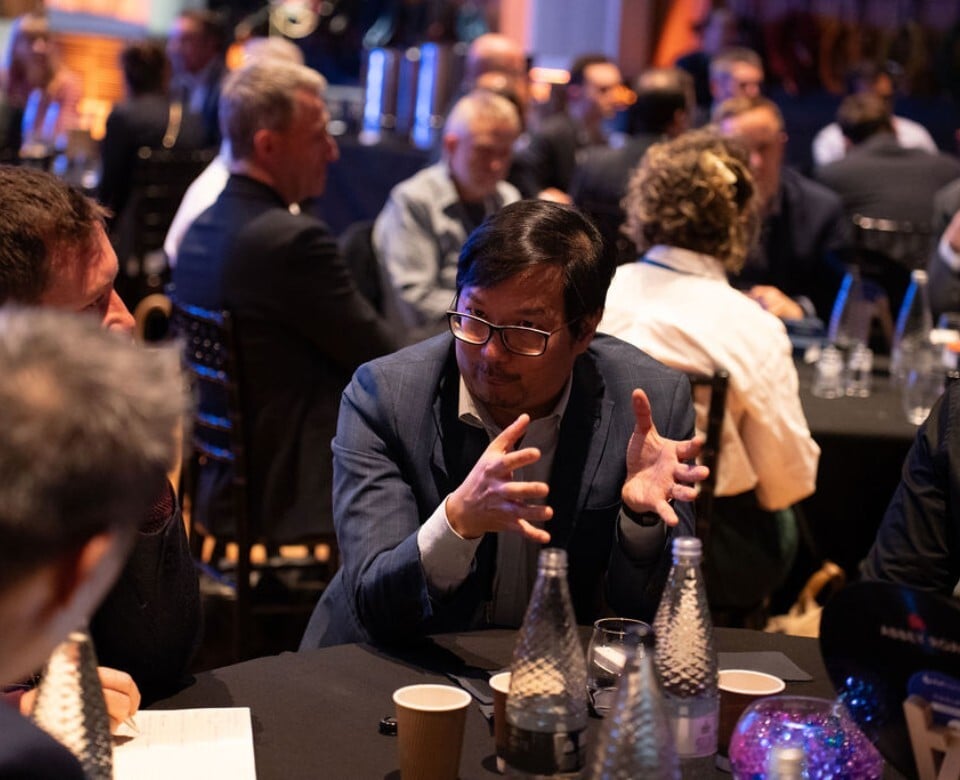
Yet, at a recent Hot Topics C-Suite Exchange, in partnership with Red Hat, a panel of industry experts pointed out that the rush to treat AI as an operational silver bullet is a dangerous strategic mistake.
Fragmentation of a decade-long movement
The conversation surrounding automation has been a mainstay in technology leadership circles for the better part of the last decade, born on the back of the cloud movement. Over the years, the space has fragmented into three predominant areas: release automation, which is more focused on the application space; IT automation; and business process or RPA, depending on which flavor an organisation happens to use.
While all of these environments involve the IT function in some way, they have historically focused on the jurisdiction of the subject matter expertise, knowledge, and skills of respective experts in charge.
One panelist shared his observation.
“Typically, these professionals tend to work for themselves to become more efficient and shave off as much load as possible. It’s normal human behavior, as people naturally try to make their own jobs and lives easier as they go.”
However, it’s almost inevitable that groups automate purely for their own context based on their unique immediate pressures, like an engineering team automating firewall requests because they are bombarded with tickets, while entirely ignoring a massive patching backlog. In those instances, the broader enterprise operational fabric remains deeply fractured.
Such an illusion of efficiency masks a deeper systemic problem found in organisations still operating in a shared services mode.
“Using old ITIL methods, infrastructure teams will frequently claim they’re already automating things, but they’re really not. A closer look reveals they’re merely automating isolated, small steps, completely failing to automate the connection between everything,” a senior enterprise architect added.
Layering AI over this environment won’t fix the underlying structural flaws, nor will simply adding more disconnected automation. It requires removing decades of legacy thought and process to fix that foundational connection first. Otherwise, none of the advanced technology layers will ultimately matter.
Lessons from the cloud migration
The current enterprise sprint toward AI adoption mirrors previous structural shifts, specifically the introduction of cloud into enterprise and IT workflows. When looking back, it took the industry a full ten years before organisations actually bought the cloud in a way that was controlled, governed, and enterprise-ready.
“There is a parallel to what we did with the cloud. Now, enterprises are going through the same conversations around AI: trust, control, and risk, but in a far more accelerated fashion,” one of the speakers noted.
As technology leaders already possess this historical frame of reference, the core strategic challenge is figuring out how to take those hard-earned lessons and apply them to the current operational reality.
The market pressures are significantly more compressed because boards expect AI to act as an immediate cure-all, even though a massive portion of current AI initiatives are fundamentally flawed.
“In reality, close to 90% of these initiatives are rubbish. They fail to make money or make operational sense,” one expert noted. But they do result in lost time and capital. “By the time the organisation finishes evaluating the technology, chances are, it’s already old.”
To build a consistent position on which newer capabilities can operate, the underlying IT automation strategy must reframe how services are delivered. The cost of execution and access to expert knowledge are being effectively reduced to zero. It’s an assertion that not everyone may agree on, but one that changes basic expectations.
Since anyone can now write a rudimentary script or generate a tool, IT leaders must radically change the way their core services and functions are accessed. Simply put, they need to make sure they’re providing a tightly controlled, standardized baseline of automated capabilities to handle impending operational challenges.
Hitting the knowledge plateau
As organisations face mounting executive pressure to find budgetary savings, many corporate leaders fall into a dangerous trap of viewing intelligent tools primarily as a mechanism to slash headcount.
This is a highly reactive, knee-jerk response to a new technology, and senior leaders need to keep this type of messaging tightly within their own teams.
“The moment that the cost-cutting narrative makes its way out and down the corporate chain, it triggers a state of toxic productivity and a mass exodus of SMEs leaving the organisation,” one expert said.
Without highly skilled human SMEs to continually act as trainers for these models, an enterprise will quickly hit a knowledge plateau. At this point, the technology stops learning anything new. It ceases to be useful, or at the very least, as useful as it used to be.
Just like that, the organisation is left saddled with compounding operational costs from inference, compute, and training, yet the system performance stagnates. Deprived of new human context, the models begin to train themselves on AI-generated data that was trained on AI-generated data in a degrading and repeating cycle.
Senior leaders must reflect on the fact that AI can’t be treated like the cloud, where an organisation could deploy an all-encompassing, broad transformation strategy to move workloads. It was a sentiment shared by the group.
“It’s not the same technology, nor does it share the same purpose. As such, it can’t be treated the same way because it’s highly use case-centric. For the long-term sanity and stability of the business, a human must always remain in the loop.”
Redefining human augmentation
The sheer speed and pace of AI-driven change has increased more than anything the industry has seen before. The central question for modern IT automation is whether organisations will end up with a smaller number of highly skilled individuals, supported by a much stronger technology base that helps them maintain a larger scope of operations.
True adoption must focus heavily on human augmentation. Yet, the current market hype creates widespread fear among enterprise customers regarding what will happen when their top SMEs eventually move away.
Still, this talent retention issue is a problem that automation has successfully answered for a long time. With a mature automation strategy, the solution has always been clear: automation is a systematic way to take specialised subject matter expertise and codify it directly into a shared architecture. If done properly, a new employee can step in and immediately learn from it.
This defines the true responsibility of anyone introducing human-in-the-loop interfaces into modern automation. As one of the experts noted:
“The architecture must provide the structural ability for new or adjacent employees to come into the business and function effectively within an environment built by someone else. It can’t entirely abstract the underlying systems or obscure operational realities, because doing so merely compounds the problem of cognitive load that AI is bringing to the table.”
Robust automation must serve as the primary supporting function that handles critical governance, security, and compliance standards developed over the last 40 years, while ensuring that human presence within the system remains meaningful.
Balancing between infinite demand and finite capacity
Surviving in an environment where business demand is infinite but technical capacity isn’t should be about operational priority and selectivity. As opposed to trying to do less with more, IT leaders must scrutinize their budgets and investments to categorise their activities into three distinct buckets for maximum value:
- What to start doing: High-leverage and interconnected automations that bridge the gaps between existing teams.
- What to keep doing: Maintaining core infrastructure baselines that preserve security and structural stability.
- What to stop doing: Legacy manual processes and administrative overhead.
Executing this level of selectivity requires moving past simple collaboration and focusing heavily on structural coordination. Teams collaborate, organisations coordinate. This distinction is precisely why having a centralised strategy is vital: the organisation requires a unified vision that people actually buy into.
The discussion revealed one significant problem:
“The single biggest miss in modern enterprise initiatives occurs when leadership is asked how it measures success. Most have no clear answer.”
Without a defined measurement of success, individual groups will inevitably succumb to their own operational pressures. Clear metrics allow leaders to confidently prove that the organisation has made its teams measurably more effective and successfully removed the pressures they’re constantly under.
Build a service architecture you would buy
An IT leader must look at the internal services and infrastructure functions they provide to the enterprise and ask an uncompromising question:
Would you buy what you offer?
The reality is harsh and calculated. If the internal service delivery model is slow or buried under legacy thinking, developers and business units will find ways to bypass it, thus increasing security risks and creating unmanaged shadow environments.
So, transitioning from fragmented scripting into an enterprise-grade automation engine that genuinely lays the foundation for growth requires three operational pillars:
- Right motivation: Leadership must be driven by the correct underlying motivations. The program can’t be used as a short-sighted mechanism to slash headcount or spark toxic productivity. Instead, it must be motivated by a desire to eliminate systemic toil, secure core data pipelines, and stabilise the operating environment so human capital can focus on high-value business logic.
- Quantifiable outcomes: Organisations must establish a rigorous way to measure the outcome. Leadership must identify explicit KPIs from the outset to verify that the program is actively tracking toward success. These metrics must clear the air of vague sentiment and prove that the automation strategy is lowering execution costs and reducing cycle times, not to mention mitigating security pressures across all groups.
- Central driving committee: Successful top-down initiatives call for a semi-formal driving committee for the organisation. This cross-functional steering group is tasked with breaking down deep-seated departmental silos and enforcing standardized API configurations, so that every automated pathway explicitly supports the overarching corporate growth strategy.
Artificial intelligence is rapidly shifting executive expectations and compressing market timelines, but it can’t fix disconnected infrastructure workflows or legacy operational thought. The organisations that successfully navigate this transition will be those that recognize that a standardised and deeply integrated IT automation strategy remains the non-negotiable prerequisite for sustainable growth.
In partnership with



Join the community
To join the HotTopics Community and gain access to our exclusive content, events and networking opportunities simply fill in the form below.